
Mastering Enterprise Attack Surface Management for Cyber Vulnerability Minimization
In today’s hyper-connected world, cyber threats evolve faster than ever. Waiting to react is no longer an option. To stay ahead, organizations must adopt a proactive, autonomous approach to security. This is where mastering cyber vulnerability minimization becomes mission-critical. The stakes are high, and the window to act is shrinking. I’m here to guide you through the strategic imperatives of mastering enterprise attack surface management and how it transforms your security posture from reactive to relentlessly proactive.
Why Cyber Vulnerability Minimization Demands Immediate Action
Every second your enterprise remains exposed, attackers probe for weaknesses. The attack surface expands daily with cloud migrations, IoT devices, and remote workforces. Traditional security teams struggle to keep pace with manual processes and fragmented tools. The result? Gaps that adversaries exploit with surgical precision.
Cyber vulnerability minimization is not just a technical challenge—it’s a business imperative. Unpatched vulnerabilities, misconfigured assets, and shadow IT create entry points that threaten revenue, reputation, and regulatory compliance. The cost of breach recovery dwarfs the investment in prevention.
To win this battle, you must:
Identify every asset and vulnerability continuously
Prioritize risks based on business impact
Automate remediation workflows to close gaps fast
Leverage AI-driven insights to predict attacker behavior
This is the new reality. The future belongs to those who master these capabilities at scale.
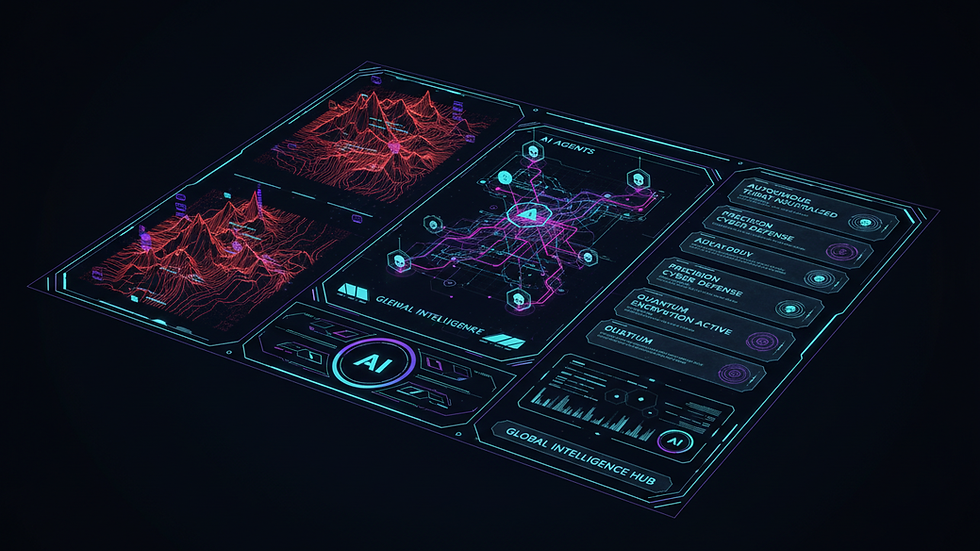
The Strategic Role of Cyber Vulnerability Minimization in Enterprise Security
Cyber vulnerability minimization is the backbone of a resilient security strategy. It shifts the focus from firefighting incidents to eliminating attack vectors before they are weaponized. This requires a comprehensive understanding of your entire digital footprint—on-premises, cloud, and third-party environments.
The challenge lies in the complexity and volume of data. Manual asset inventories and vulnerability scans are outdated. They miss transient assets, shadow IT, and zero-day exposures. To overcome this, you need an autonomous system that continuously maps your attack surface, detects anomalies, and adapts to changes in real time.
The business impact is profound:
Reduced risk exposure lowers the chance of costly breaches
Faster response times minimize operational disruption
Improved compliance posture avoids regulatory penalties
Optimized resource allocation focuses efforts where they matter most
By embedding cyber vulnerability minimization into your security fabric, you transform risk management from a checkbox exercise into a strategic advantage.
What is the difference between ASM and BAS?
Understanding the distinction between Attack Surface Management (ASM) and Breach and Attack Simulation (BAS) is crucial for building a robust defense.
Attack Surface Management (ASM) focuses on discovering, monitoring, and managing all external and internal assets that could be exploited. It provides a dynamic inventory of your digital footprint, highlighting vulnerabilities and misconfigurations before attackers find them.
Breach and Attack Simulation (BAS), on the other hand, simulates real-world attack scenarios to test your defenses. It validates the effectiveness of your security controls by mimicking attacker tactics, techniques, and procedures (TTPs).
While ASM is about visibility and prevention, BAS is about validation and response. Both are essential but serve different purposes. ASM lays the groundwork by continuously minimizing your attack surface, while BAS ensures your defenses hold up under pressure.
Integrating ASM and BAS creates a feedback loop that strengthens your security posture. ASM identifies risks, BAS tests controls, and the cycle repeats—accelerating your journey to autonomous defense.

Leveraging Agentic AI for Autonomous Defense
The complexity of modern attack surfaces demands more than human effort. This is where agentic AI security platforms redefine the game. These platforms deploy specialized AI agents that operate 24/7, autonomously scanning, analyzing, and neutralizing threats at machine speed.
Here’s how agentic AI transforms enterprise security:
Continuous Discovery: AI agents map every asset, including ephemeral cloud instances and IoT devices, ensuring no blind spots.
Risk Prioritization: Machine learning models assess vulnerabilities based on exploitability and business impact, focusing efforts on the highest risks.
Automated Remediation: AI-driven workflows initiate patching, configuration changes, or isolation without waiting for manual intervention.
Predictive Threat Hunting: Agents anticipate attacker moves by analyzing threat intelligence and behavioral patterns, enabling preemptive action.
This autonomous workforce replaces slow, reactive security operations with relentless, proactive defense. The result is a dramatic reduction in dwell time and breach likelihood.
Practical Steps to Master Enterprise Attack Surface Management
Mastering enterprise attack surface management requires a disciplined, strategic approach. Here are actionable steps to implement immediately:
Establish a Single Source of Truth: Consolidate asset inventories across all environments into a unified platform.
Automate Continuous Discovery: Deploy tools that scan networks, cloud, and endpoints in real time to detect new and transient assets.
Integrate Threat Intelligence: Enrich vulnerability data with external threat feeds to understand attacker motivations and tactics.
Prioritize Based on Business Context: Use risk scoring models that factor in asset criticality, data sensitivity, and exposure.
Implement Automated Remediation: Define playbooks for common vulnerabilities and misconfigurations to enable rapid fixes.
Conduct Regular Simulations: Use BAS tools to validate your defenses and identify gaps in detection and response.
Leverage AI for Continuous Improvement: Adopt agentic AI platforms that learn and adapt to evolving threats autonomously.
By following these steps, you build a resilient, adaptive security posture that minimizes vulnerabilities and neutralizes threats before they escalate.
The Future of Security is Autonomous and Agentic
The era of manual, reactive security is over. Enterprises that fail to embrace autonomous, AI-driven defense will fall behind. Mastering cyber vulnerability minimization through advanced enterprise attack surface management is the foundation of this transformation.
Agentic AI platforms like OSM’s Autonomous Workforce are not just tools—they are strategic partners that operate relentlessly to protect your digital assets. They empower security teams to focus on high-value decisions while AI handles the heavy lifting of discovery, prioritization, and remediation.
The future demands bold leadership and decisive action. The time to master your attack surface and eliminate vulnerabilities is now. Don’t wait for the next breach to force your hand. Take control, automate your defense, and secure your enterprise at machine speed.
Your adversaries are evolving. So must you.


